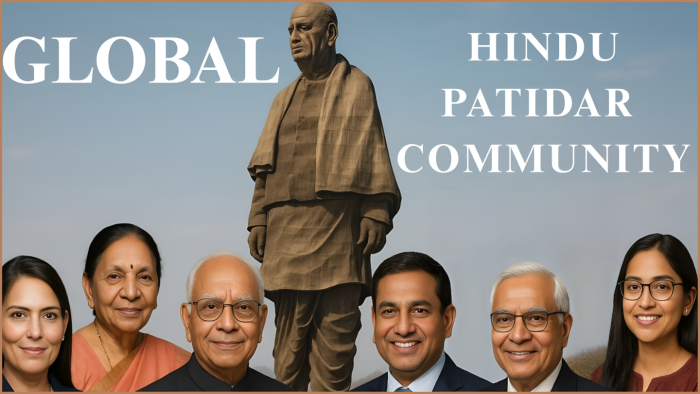
The Patidar community holds a significant place in the Indian social structure, serving as a strong pillar of the agricultural economy and rural development. Deeply rooted in tradition, the community reflects a cultural continuity that connects ancient Vedic heritage with modern global entrepreneurship.
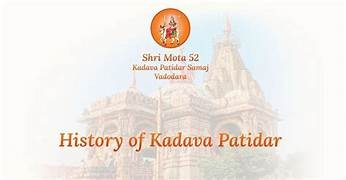
Historically associated with the agricultural landscape of Gujarat, Patidars have contributed extensively to farming innovation, land management, and economic growth. The community is broadly represented by two major groups — Leva and Kadva — each with a rich historical and cultural legacy.
Their history is a unique blend of mythology, ethnographic migration, and
administrative evolution across different historical periods.
References from Vedic literature, medieval records, and modern anthropological
studies highlight their origin, social development, and geographical expansion.
Over time, the Patidar community has successfully transitioned from traditional
agrarian roots to global leadership in business, education, and
entrepreneurship.
Today, the community stands as a symbol of resilience, unity, cultural
preservation, and progressive growth on both national and international
platforms.
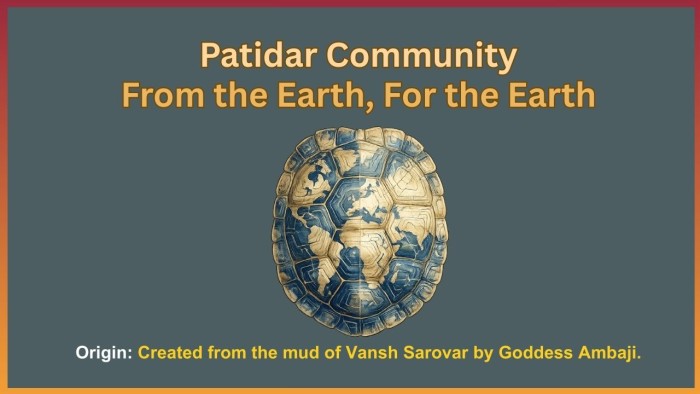
The Patidar community traces its roots to Vedic times, inspired by the term “Tuvikurmi” from Rigveda. Belonging to Kashyap gotra, we symbolize strength, resilience, and a deep connection to agrarian and warrior traditions.
The Patidar

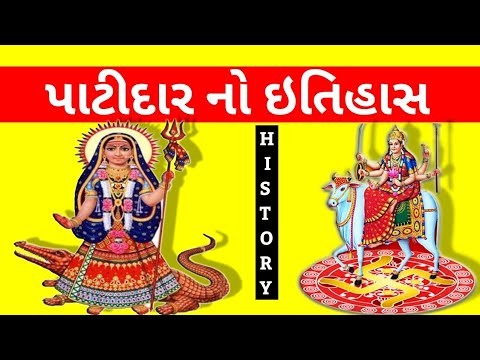
Our spiritual strength lies in the worship of divine mothers—Umiya for Kadva Patidars and Amba or Khodiyar Mata for Leuva Patidars—who guide and protect our community through generations with grace and devotion.
In 72 and 52 villages of Madhya Pradesh, our people still speak “Patidari Gujarati,” a unique dialect that preserves our linguistic heritage and reflects our deep historical roots in Gujarat’s Charotar region.
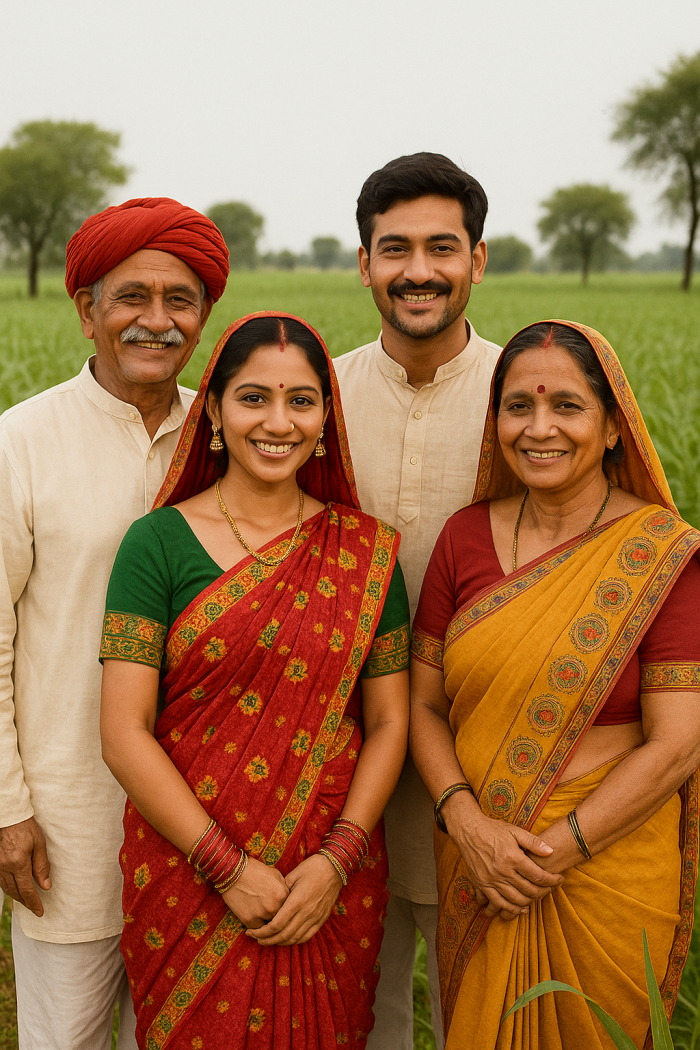
Agriculture, devotion, language, and oral traditions define our cultural foundation. Passed down through centuries, our way of life reflects values of harmony, responsibility, and respect for both ancestors and the land.